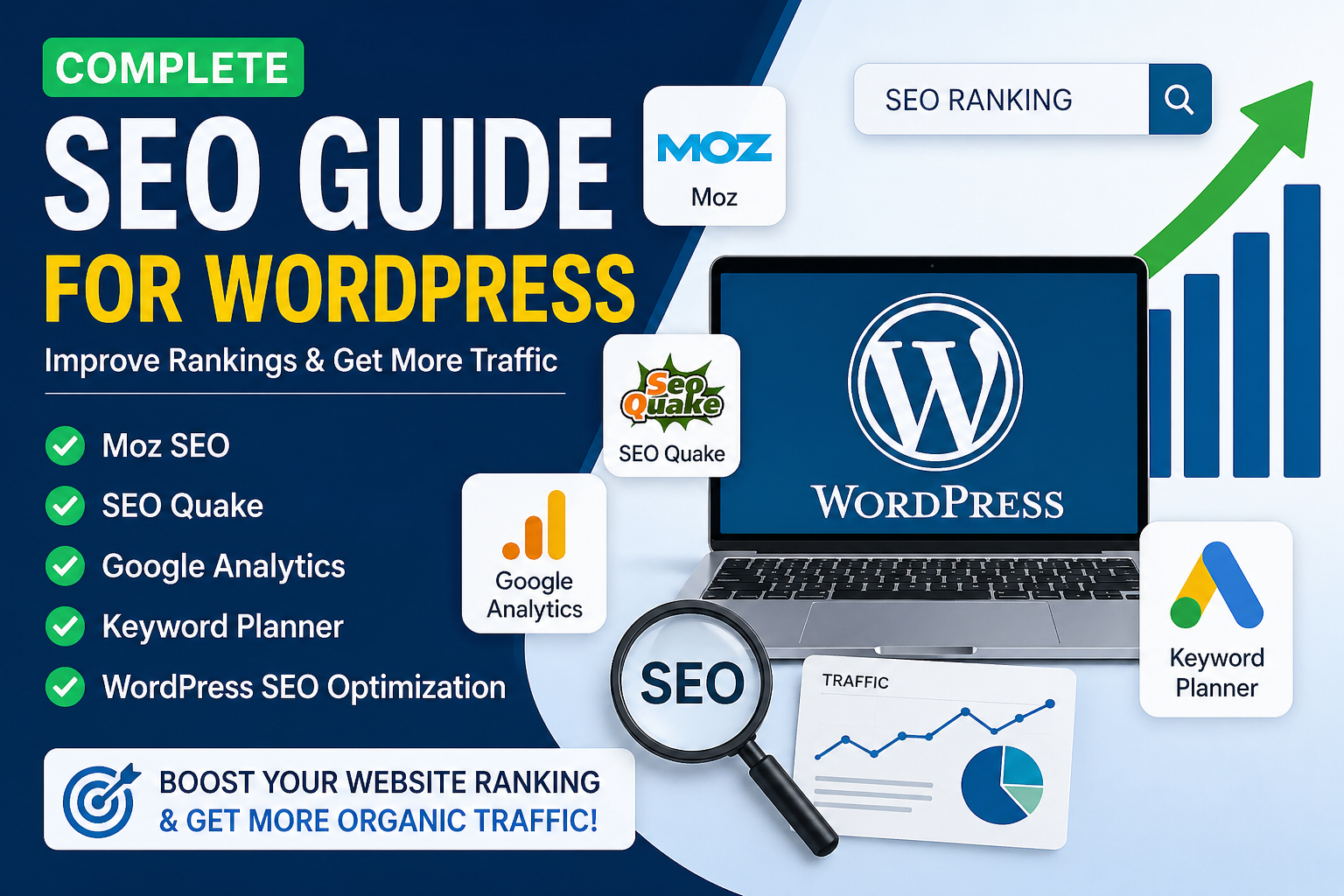
Search Engine Optimization (SEO) is one of the most important digital marketing skills for improving website visibility and ranking on Google. Whether you are using WordPress, OpenCart, or analyzing traffic with Google tools, understanding SEO tools and strategies is essential.
In this guide, we will cover everything from what Moz is in SEO, how SEO Quake works, comparisons between tools, WordPress SEO optimization, keyword usage, and how to use Google Analytics and Keyword Planner effectively.
What is Moz in SEO?
Moz is one of the most popular SEO software tools used for improving website rankings and analyzing search performance.
Moz helps you:
- Track keyword rankings
- Analyze backlinks
- Check domain authority (DA)
- Perform site audits
- Research keywords
One of the most important metrics from Moz is Domain Authority (DA), which predicts how well a website will rank on search engines.
Why Moz is important in SEO:
- Helps understand website strength
- Improves link building strategy
- Provides keyword suggestions
- Identifies SEO issues
What is SEO Quake?
SEO Quake is a free browser extension that provides quick SEO analysis of any webpage.
It helps you check:
- Page SEO score
- Keyword density
- Backlinks overview
- Meta tags
- Internal/external links
Unlike Moz, SEO Quake is more of a quick SEO inspection tool, useful for on-page SEO analysis.
| Feature | Moz | SEO Quake |
|---|---|---|
| Type | Full SEO platform | Browser extension |
| Keyword Research | Advanced | Basic |
| Backlink Analysis | Strong | Limited |
| Site Audit | Yes | No |
| Ease of Use | Medium | Very easy |
| Pricing | Paid + Free tools | Free |
Summary:
Moz and SEO Quake Pricing
Moz Pricing:
- Free version available (limited features)
- Paid plans start from basic SEO tools to advanced enterprise solutions
SEO Quake Pricing:
- Completely free browser extension
- No premium subscription required
Do Search Engines Use Keywords for SEO?
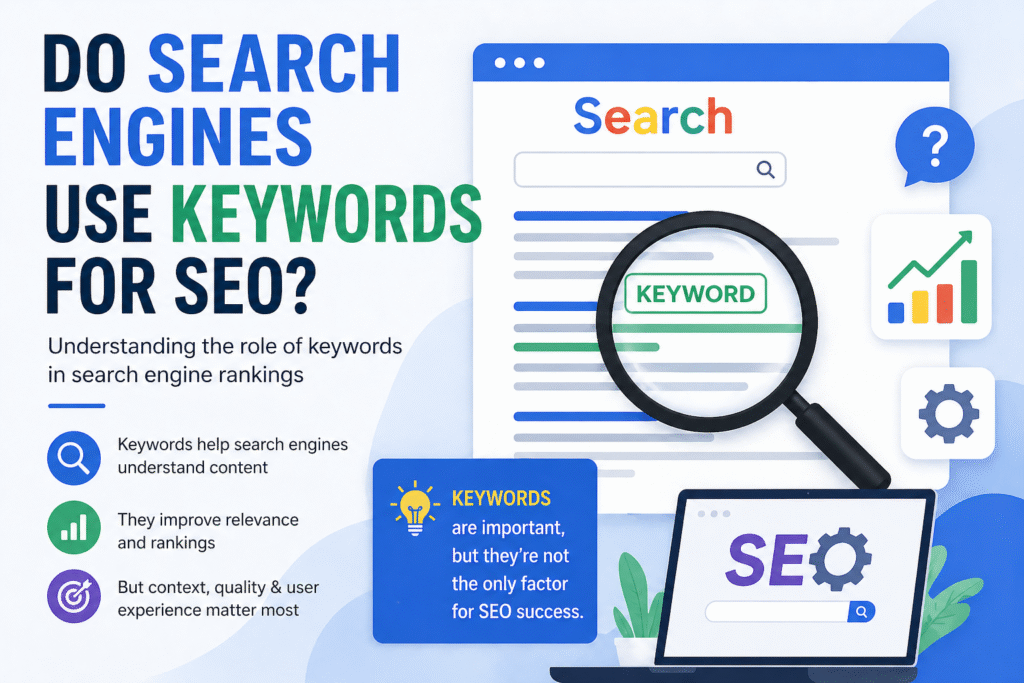
Search engines continue to use keywords as part of their ranking algorithms; however, their role has evolved significantly. Modern search engines prioritize context, user intent, and semantic relevance over exact keyword matching. While keywords remain essential, they must be integrated naturally into high-quality content. Over-optimization or keyword stuffing is no longer effective and may negatively impact rankings.
Google focuses on:
- Search intent (what user wants)
- Context of content
- Semantic keywords (related terms)
- Content quality and relevance
Keyword stuffing no longer works. Instead, natural keyword usage is important.
Using Keyword Planner for SEO Optimization
Google Keyword Planner is a powerful research tool used to identify relevant keywords and evaluate their search volume and competition. It enables marketers to discover new content opportunities and select keywords that align with user search behavior. By analyzing keyword trends, businesses can develop targeted content strategies that improve visibility and organic traffic growth.
How to use it:
- Log into Google Ads
- Open Keyword Planner
- Enter your topic or keyword
- Analyze:
- Search volume
- Competition
- Keyword ideas
Benefits:
- Find high-traffic keywords
- Discover content ideas
- Improve SEO targeting
Improving SEO Ranking in WordPress
WordPress is inherently SEO-friendly, but achieving high rankings requires proper optimization. Effective strategies include the use of SEO plugins, optimization of page speed, creation of clean URL structures, and implementation of internal linking strategies. High-quality content combined with properly structured metadata further enhances search visibility and ranking potential.
How to Improve SEO Ranking in WordPress
Improving SEO score in WordPress involves optimizing both technical and on-page elements. This includes proper heading hierarchy, image optimization with alt attributes, mobile responsiveness, and improved page loading performance. Reducing unnecessary plugins and ensuring content readability also contribute to a higher SEO score and better overall website performance.
How to Add SEO Keywords in WordPress Website
Best practices:
- Use SEO plugins (Yoast or Rank Math)
- Optimize page speed
- Use SEO-friendly URLs
- Add internal links
- Write optimized meta titles and descriptions
Performing SEO Independently in WordPress
SEO can be effectively managed independently within WordPress using a structured approach. This involves installing SEO plugins, conducting keyword research, optimizing content regularly, and maintaining updated blog posts. Additionally, internal linking and proper indexing through Google Search Console play a crucial role in maintaining long-term SEO performance.
To improve SEO score:
- Use proper heading structure (H1, H2, H3)
- Add image alt text
- Improve mobile responsiveness
- Reduce plugin overload
- Optimize content readability
Adding SEO Keywords in WordPress Websites
SEO keywords should be strategically integrated into WordPress websites to enhance search visibility. Keywords must be included naturally within titles, headings, meta descriptions, and content paragraphs. They should also be incorporated into image alt text and URLs where relevant. However, maintaining natural readability is essential to avoid over-optimization and ensure compliance with search engine guidelines.
You can do SEO yourself by:
- Installing SEO plugins
- Researching keywords
- Writing optimized content
- Building internal links
- Submitting sitemap to Google Search Console
What is SEO Keyword in OpenCart?
In OpenCart, SEO keywords are used to create optimized and user-friendly URLs. Instead of dynamic query-based URLs, SEO-friendly keywords allow cleaner structures that improve indexing and search engine understanding. This contributes to better visibility and improved user experience, particularly for e-commerce platforms.
How to Measure SEO in Google Analytics
Google Analytics is a critical tool for measuring SEO effectiveness. It provides detailed insights into organic traffic, user behavior, bounce rates, session duration, and conversion metrics. These data points allow website owners to evaluate the success of their SEO strategies and identify areas requiring improvement.
Google Analytics helps measure SEO performance through:
- Organic traffic
- Bounce rate
- Session duration
- Pages per session
- Conversion rate
Using Google Analytics to Improve SEO
Google Analytics supports SEO optimization by providing actionable data regarding user engagement and traffic sources. By analyzing high-performing pages and identifying underperforming content, businesses can refine their SEO strategy. This data-driven approach enables continuous improvement in content quality and search engine visibility.
You can improve SEO using analytics by:
- Identifying top-performing pages
- Fixing high bounce rate pages
- Improving underperforming content
- Tracking traffic sources
- Optimizing user behavior flow
Improving SEO with Google Analytics Insights
Google Analytics can significantly enhance SEO outcomes by identifying keyword performance, user behavior patterns, and conversion pathways. By leveraging this data, businesses can optimize landing pages, improve content structure, and enhance user experience. Over time, this leads to improved rankings and sustainable organic traffic growth.
Google Analytics helps you refine SEO strategy:
- Find keywords bringing traffic
- Analyze user engagement
- Improve landing pages
- Track conversions from organic search
Frequently Asked Questions
What is Moz in SEO used for?
Moz is used for improving website SEO performance by providing tools for keyword research, backlink analysis, site audits, and tracking domain authority. It helps marketers understand how well a website is performing in search engines and what improvements are needed for better rankings.
Is SEO Quake a free tool?
Yes, SEO Quake is completely free to use. It is a browser extension that provides quick SEO insights such as meta tags, keyword density, and page analysis without requiring any subscription or payment.
What is the difference between Moz and SEO Quake?
Moz is a full SEO platform designed for advanced SEO analysis, keyword research, and backlink tracking, while SEO Quake is a lightweight browser tool used for quick on-page SEO checks. Moz is more detailed and strategic, whereas SEO Quake is faster and simpler.
Does Google still use keywords for SEO ranking?
Yes, Google still uses keywords, but it focuses more on search intent and content relevance rather than exact keyword matching. Properly placed, natural keywords within high-quality content help improve rankings.
How does Google Keyword Planner help in SEO?
Google Keyword Planner helps users find keyword ideas, search volume, and competition levels. It is used to identify the best keywords for content strategy and improve targeting for organic search traffic.
How can I improve SEO in WordPress?
SEO in WordPress can be improved by using SEO plugins, optimizing website speed, creating SEO-friendly URLs, using internal links, and writing high-quality optimized content with proper keyword placement.
How do I add SEO keywords in WordPress?
SEO keywords should be added naturally in page titles, headings, meta descriptions, content paragraphs, image alt text, and URLs. Overuse of keywords should be avoided to maintain content quality and ranking performance.
What is SEO keyword in OpenCart?
In OpenCart, SEO keywords are used to create clean, search-friendly URLs for products and pages. This improves indexing by search engines and enhances user experience.
How does Google Analytics help in SEO?
Google Analytics helps track organic traffic, user behavior, bounce rate, and conversions. It provides insights that help website owners understand performance and optimize their SEO strategy.
Can Google Analytics improve SEO results?
Yes, Google Analytics can improve SEO by identifying high-performing pages, analyzing user behavior, and highlighting underperforming content that needs optimization.
Conclusion
Effective SEO requires a combination of tools, strategy, and continuous optimization. Platforms such as Moz and SEO Quake provide valuable analytical insights, while WordPress, OpenCart, Keyword Planner, and Google Analytics offer practical implementation and performance tracking capabilities. When used together, these tools enable businesses to build a strong SEO foundation, improve search rankings, and achieve long-term digital growth.
At SoftelligenceHub, the focus remains on delivering practical, data-driven SEO insights that help businesses strengthen their online presence and achieve measurable results.