What is Off-Page SEO?
Off-page SEO, or off-site SEO, refers to all strategies and actions taken outside your website to improve its search engine rankings, credibility, and online authority. Unlike on-page SEO, which focuses on optimizing content, meta tags, and site structure, off-page SEO emphasizes how your website is perceived by other websites, users, and search engines.
The primary goal of off-page SEO is to build trust and authority. This is achieved through tactics such as link building, guest posting, social media engagement, digital PR, brand mentions, and content promotion. High-quality backlinks from reputable websites act as endorsements, signaling to search engines that your content is valuable and reliable. Quality matters more than quantity, as a single link from an authoritative source often outweighs numerous links from low-quality sites.
Beyond backlinks, off-page SEO includes building your brand’s reputation, generating social signals, managing online reviews, and optimizing local listings. These external signals collectively demonstrate your website’s credibility and relevance, influencing both search engine rankings and user trust.
In essence, off-page SEO is about shaping your website’s reputation and authority across the web. By implementing effective off-site strategies, businesses can enhance their visibility, drive organic traffic, and secure higher rankings in search engine results.
Why Off-Page SEO is Important?
Off-page SEO, or off page search engine optimization, is essential for building a website’s credibility and improving its visibility in search engines. While on-page SEO ensures your site’s content is well-structured and optimized, off-page SEO focuses on signals from outside your website. These off page SEO elements—like backlinks from trusted sites, social media mentions, online reviews, and brand references—show search engines that your site is valuable and trustworthy.
Backlinks and mentions act like recommendations, helping your website stand out in search results. Sites with strong off-page signals often rank higher than those with similar content but weaker external validation. Beyond rankings, off-page SEO also strengthens your brand’s reputation, increases visibility across digital channels, and attracts more organic traffic. In today’s competitive online landscape, ignoring off-page strategies can limit your site’s potential and leave growth opportunities untapped.
Off-Page SEO vs On-Page SEO
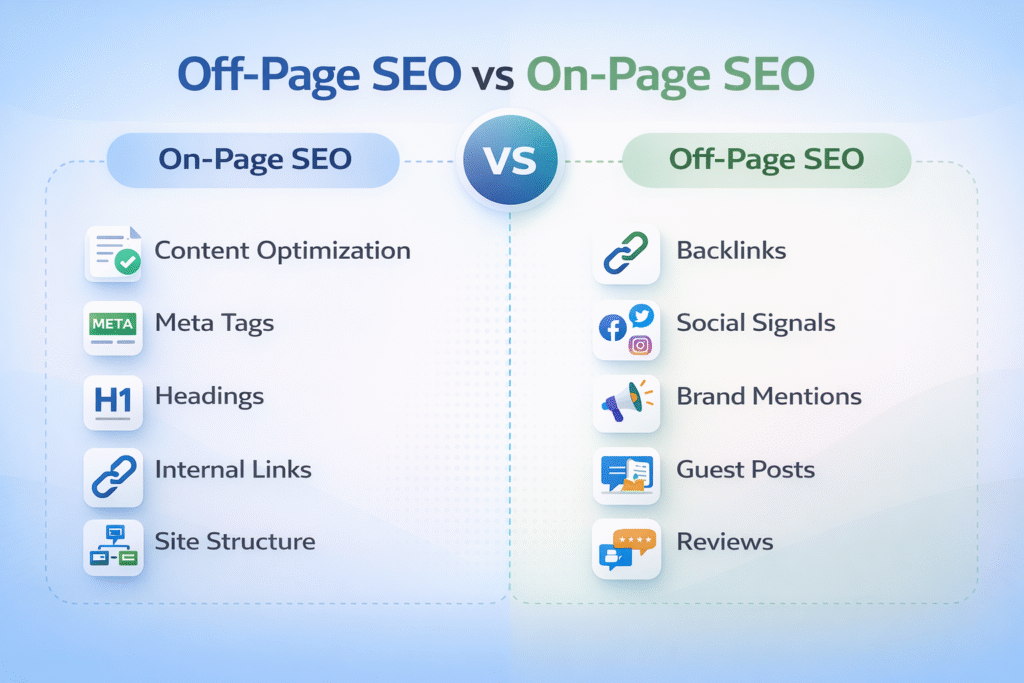
SEO involves multiple strategies to improve a website’s ranking, and it’s typically divided into two main areas: on-page SEO and off page SEO. On-page SEO focuses on everything happening directly on your website. This includes optimizing content, meta titles, headings, images, internal links, and site structure to make it easier for search engines to understand your pages.
In contrast, off page SEO refers to actions taken outside of your website to boost its authority, credibility, and online visibility. Key elements include backlinks from reputable websites, social media engagement, brand mentions, guest posts, and online reviews. These signals help search engines determine the trustworthiness and relevance of your site in comparison to others.
Both approaches are essential. On-page SEO ensures your content is high quality and well-structured, while off-page SEO validates that content through external endorsements. Together, they create a balanced SEO strategy that improves rankings, builds domain authority, and enhances overall online presence.
Top Off-Page SEO Techniques in 2026
Implementing the right off page techniques in SEO is essential for boosting your website’s authority, credibility, and search engine rankings. Off page optimization focuses on actions outside your website that demonstrate trustworthiness to both users and search engines. Here are the key techniques to focus on in 2026:
- Link Building
Acquiring backlinks from authoritative websites acts as a vote of confidence for your site. High-quality links improve your domain authority and search engine rankings. E-commerce sites need specialized strategies, so check out this complete guide to e-commerce SEO for more detailed tactics. - Guest Blogging
Contributing content to relevant industry websites helps you earn backlinks while reaching a broader audience and establishing your expertise. - Influencer Marketing
Collaborating with influencers can expand your reach, generate brand mentions, and drive traffic to your site, all of which are signals for search engines. - Social Media Marketing
Sharing content on platforms like LinkedIn, Instagram, and X (formerly Twitter) helps increase visibility, engagement, and social signals. - Digital PR
Press releases, media coverage, and online outreach campaigns enhance your website’s credibility and generate mentions from trusted sources. - Local Citations
Listing your business accurately on directories, review sites, and Google Business Profile strengthens your local SEO presence and builds trust with regional audiences.
By focusing on these off-page SEO strategies, businesses can complement on-page efforts, improve rankings, and enhance their overall online reputation.
How to Do Off-Page SEO: Step-by-Step Guide
Implementing effective off-page SEO requires a structured approach. Using a clear off page SEO checklist or off page SEO work list ensures that every important activity is covered to boost your site’s authority and rankings. Here’s a step-by-step guide:
- Audit Your Current Backlinks
Start by reviewing existing backlinks to understand your site’s authority and identify any toxic links that could harm rankings. - Develop a Link-Building Strategy
Focus on earning high-quality backlinks from authoritative websites through guest posts, outreach, or partnerships. - Leverage Guest Blogging
Contribute valuable content to industry-relevant blogs, which helps gain backlinks and exposes your brand to a wider audience. - Engage in Social Media Marketing
Share content consistently on social platforms to increase engagement, brand mentions, and social signals. - Use Digital PR
Publish press releases, collaborate with media outlets, and participate in interviews to gain online mentions and backlinks. - Optimize Local Listings and Citations
Maintain accurate business information across directories, Google Business Profile, and review sites to enhance local SEO. - Monitor and Update Your Off-Page Activities
Regularly track backlinks, mentions, and social signals, updating your off page SEO checklist to ensure continuous improvement.
Following this structured off page SEO work list helps websites improve search engine trust, authority, and organic traffic.
Best Off-Page SEO Tools to Use
Effective off-page SEO relies on the right tools to manage backlinks, track mentions, and measure your website’s authority. Using trusted off-page SEO tools can streamline your efforts, improve efficiency, and ensure your strategies deliver results.
For backlink management and analysis, SEO tools to check backlinks are essential. Platforms like Ahrefs, SEMrush, and Moz allow you to monitor your site’s backlink profile, analyze competitor links, and identify opportunities for high-quality link acquisition. These tools provide valuable insights into the authority, relevance, and trustworthiness of linking domains.
If you’re looking for comprehensive off page SEO services, many agencies offer tailored strategies that combine link building, guest posting, influencer outreach, and digital PR. Professional SEO services help businesses implement proven off-page tactics while saving time and ensuring quality.
Other useful tools include SEOquake for site audits, BuzzStream for outreach management, and Google Search Console for monitoring external links and detecting toxic backlinks. By leveraging a combination of off-page SEO tools and professional services, you can strengthen your website’s authority, increase organic traffic, and improve search engine rankings consistently.
Top 7 Off-Page SEO Tools in Detail
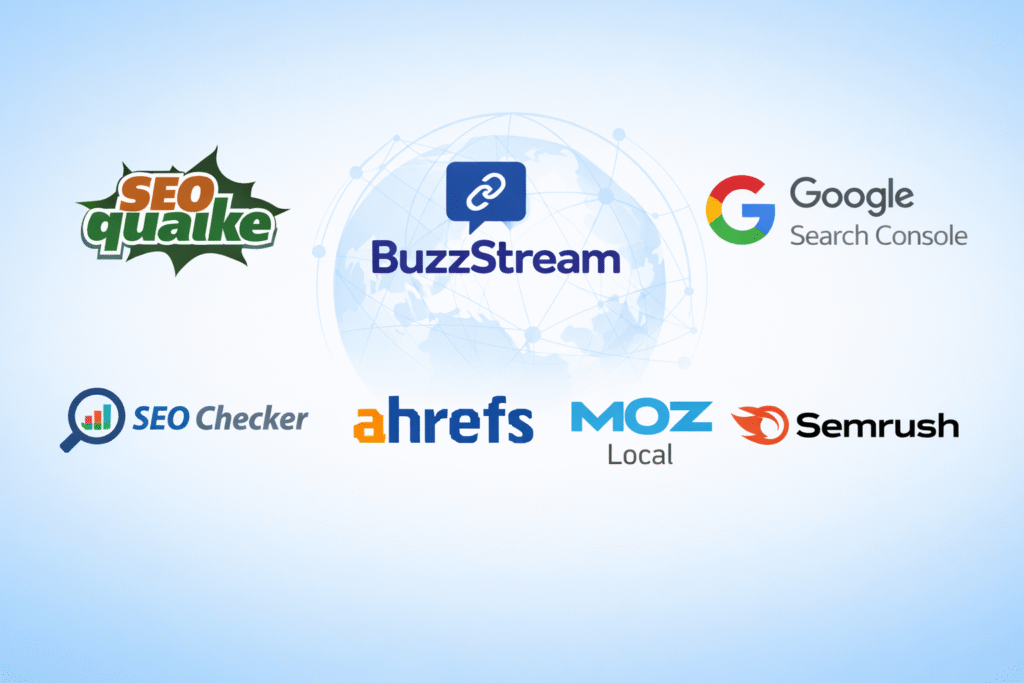
Using the right tools is essential for effective off-page SEO analysis and strategy. Here are the top seven tools you should consider in 2026:
- SEOquake
A free browser plugin that provides instant SEO insights, including backlinks, domain authority, and page health. It’s an excellent off page SEO checker for quick audits and competitor comparisons. - BuzzStream
Designed for outreach management, BuzzStream helps you organize contacts, schedule emails, and monitor responses—ideal for link-building campaigns. - Google Search Console
This free tool allows you to track backlinks, detect toxic links, and monitor your website’s performance in search results. - SEO Checker
A simple yet effective off page SEO checker, it evaluates your site’s backlink profile and provides actionable recommendations for improvement. - Ahrefs Backlink Checker
Known as a leading ahrefs off page seo tool for checking domain rating (DR) you can use it free of Cost, it lets you analyze competitor backlinks, monitor your own, and discover high-quality linking opportunities. - Moz Local Listing Score
Ensures your business listings are accurate and consistent across directories, improving local SEO and credibility. - Semrush Listing Management
Helps track and update local listings, respond to reviews, and maintain an authoritative online presence.
Using these off-page SEO tools together ensures thorough off page SEO analysis, better backlink management, and stronger search engine authority.
Off-Page SEO for Businesses & Companies
For businesses, working with a professional off page SEO company is crucial to improve online authority and visibility. SEO offpage strategies focus on high-quality backlinks, brand mentions, social signals, and digital PR. These techniques help increase search rankings, attract organic traffic, and build long-term credibility. By leveraging off-page SEO, companies can strengthen their reputation, outperform competitors, and grow their online presence effectively. Even small businesses can benefit from affordable SEO services that include basic off-page strategies.
Off-Page SEO Checklist & Best Practices (2026)
A well-structured off page SEO checklist is essential for improving your website’s authority, trustworthiness, and search engine rankings. Using a clear off page SEO work list ensures all critical offsite activities are covered and executed efficiently.
Key offpage practices include:
- Link Building: Focus on acquiring high-quality backlinks from authoritative websites in your niche.
- Guest Blogging: Contribute content to relevant sites to earn backlinks and expand your audience.
- Influencer Outreach: Collaborate with influencers to generate brand mentions and boost credibility.
- Social Media Engagement: Share content consistently to increase social signals and brand awareness.
- Digital PR: Publish press releases, participate in interviews, and gain media coverage to enhance your reputation.
- Local Citations: Maintain accurate business listings across directories and review platforms for better local SEO.For local businesses, especially US-based startups looking for local SEO, getting your local listings right is the first step to better rankings.
Regularly monitoring your backlinks, mentions, and brand visibility ensures your offpage efforts are effective. Following this off page SEO checklist and work list helps businesses improve rankings, attract organic traffic, and maintain a strong online presence.
Frequently Asked Questions (FAQs)
What is off-page in SEO?
Off-page SEO refers to all activities performed outside your own website to improve its search engine rankings. This includes building high-quality backlinks from other sites, social media engagement, online reviews, influencer mentions, and digital PR.
What is the basic difference between on-page and off-page SEO?
On-page SEO involves optimizing elements on your website (like content, meta tags, headings). Off-page SEO focuses on building your site’s authority through external signals (like backlinks and social shares). Think of it as: on-page is what you control on your site, off-page is how others perceive your site.
What are the 4 types of SEO?
The four main types are: 1) On-page SEO (content optimization), 2) Off-page SEO (link building and authority), 3) Technical SEO (site speed, mobile-friendliness), and 4) Local SEO (optimizing for local searches and Google Business Profile).
What is an off-page SEO checklist?
A practical off-page SEO checklist includes: auditing existing backlinks, creating a link-building strategy, guest posting on relevant sites, active social media promotion, digital PR outreach, building local citations, and regular monitoring of all off-page activities.
What is the 80/20 rule for SEO?
The 80/20 rule (Pareto Principle) in SEO means that 80% of your results come from 20% of your efforts. For off-page SEO, this usually means focusing most of your time on high-impact activities like acquiring quality backlinks from authoritative sites, rather than trying to do everything equally.
What are the best tools for off-page SEO?
The top tools are: Ahrefs (for backlink analysis), SEMrush (for competitor research), Moz (for domain authority tracking), BuzzStream (for outreach management), Google Search Console (for monitoring your links), and social media analytics tools for tracking mentions.
Conclusion & Next Steps
Off-page SEO is a vital part of any successful digital marketing strategy. By focusing on external signals such as backlinks, brand mentions, social engagement, and digital PR, you can significantly improve your website’s authority, credibility, and search engine rankings.If you need help implementing these strategies, consider working with a professional SEO agency for sustainable growth.
To stay ahead, regularly conduct off page SEO analysis to monitor backlinks, mentions, and social signals. Leveraging the right off-page SEO tools like Ahrefs, SEMrush, and Moz can streamline this process, helping you identify opportunities, track performance, and adjust strategies effectively.
The next step is to create a structured off page SEO work list or checklist, implement these techniques consistently, and combine them with strong on-page SEO. Transparent SEO pricing and plans can help you budget effectively, whether you’re building an in-house team or partnering with experts With persistence and strategic execution, off-page SEO can drive long-term traffic, visibility, and growth for your website.