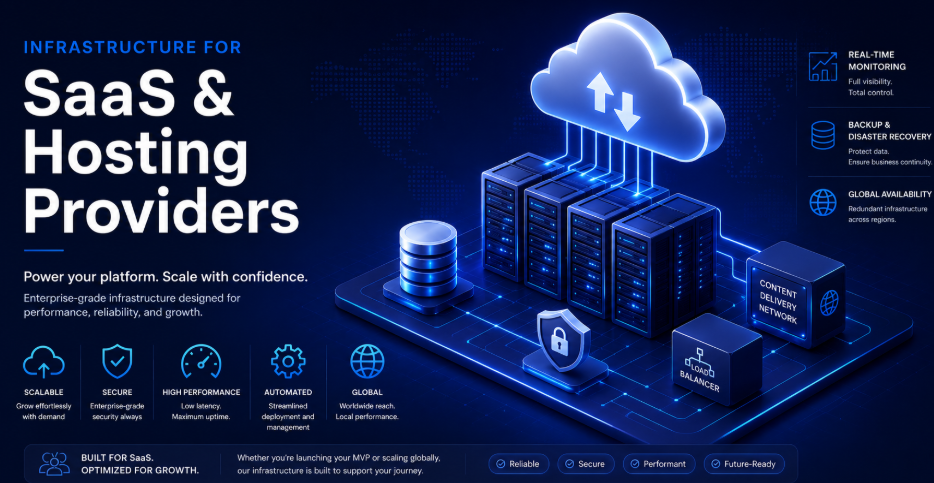
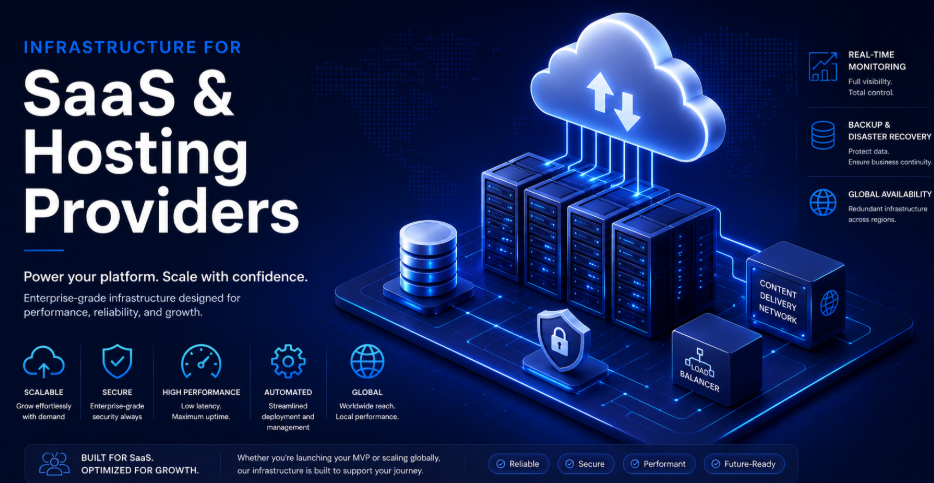
SaaS businesses and hosting providers need infrastructure that can support performance, scalability, and predictable growth. Dedicated private cloud and bare metal environments are becoming a powerful alternative to traditional public cloud deployments. As SaaS platforms like softelligencehub and hosting businesses scale, choosing the right infrastructure provider becomes critical for performance, reliability, flexibility, and cost control.
Here are some of the leading companies that provide infrastructure solutions tailored for SaaS companies, MSPs, hosting providers, and cloud-native businesses.
5 Reasons SaaS & Hosting Providers Are Moving to Dedicated Infrastructure
1. Predictable Monthly Costs
Public cloud pricing can become difficult to manage as workloads grow. Charges for bandwidth, storage, API calls, and compute usage often increase unexpectedly.
Dedicated infrastructure offers fixed monthly pricing, making budgeting easier and reducing operational surprises. For SaaS providers with stable or growing workloads, this can significantly improve financial planning.
2. Better Performance for Customer Applications
Shared cloud environments often introduce “noisy neighbor” issues where other tenants impact performance.
Dedicated bare metal servers and private cloud environments provide:
- Consistent CPU performance
- Faster storage access
- Improved network throughput
- Lower latency
This results in better application responsiveness and improved customer experience.
3. Full Infrastructure Control
SaaS companies and hosting providers often require deep customization for networking, virtualization, security, and deployment workflows.
Dedicated infrastructure gives teams:
- Root-level access
- Custom networking configurations
- Flexible storage architecture
- Control over virtualization layers
- Freedom to optimize workloads
This level of control is difficult to achieve in heavily abstracted public cloud environment
4. Improved Multi-Tenant Isolation
Security and tenant isolation are critical for SaaS businesses hosting customer data.
Private cloud infrastructure allows providers to:
- Isolate workloads securely
- Enforce stricter compliance policies
- Reduce cross-tenant risks
- Implement custom firewall and access controls
This is especially valuable for industries handling sensitive or regulated data.
5. Easier Scaling for Growing Platforms
As SaaS platforms grow, infrastructure demands can change rapidly.
Dedicated infrastructure supports scalable expansion through:
- Additional compute nodes
- High-performance storage clusters
- GPU integration
- Private networking
- Hybrid cloud deployments
This flexibility enables companies to scale without rebuilding their infrastructure stack.
Top Companies Providing Infrastructure for SaaS & Hosting Providers
1. DigitalOcean
DigitalOcean is a developer-focused cloud platform known for simplifying infrastructure deployment for startups, SaaS businesses, and growing applications. Founded in 2011, the company has built a strong reputation for ease of use, transparent pricing, and fast deployment. Its platform is widely used by developers who need scalable cloud resources without the complexity of large enterprise clouds. DigitalOcean provides extensive documentation, managed services, and automation tools that help teams launch applications quickly. The company focuses heavily on SMBs and modern application development, making it a popular option for businesses seeking reliable cloud infrastructure with lower operational overhead.
Offers:
- Virtual machines (Droplets)
- Managed Kubernetes
- Managed databases
- Object storage
- App platform
- Load balancers
- Monitoring tools
Best for:
Startups, SMB SaaS platforms, and developer-focused teams.
Key advantage:
Simple cloud infrastructure with predictable pricing and excellent developer experience.
2. Linode (Akamai Cloud)
Linode has long been recognized as a cost-effective infrastructure provider for developers, hosting companies, and SaaS businesses. Acquired by Akamai, Linode combines affordable cloud computing with Akamai’s global edge network capabilities. The platform emphasizes Linux-based cloud hosting, performance consistency, and straightforward management tools. Linode has become especially popular among developers seeking alternatives to hyperscale cloud providers due to its transparent billing and strong community support. Its services are designed to support scalable applications, containerized workloads, and hosting operations without unnecessary complexity or enterprise-level pricing structures.
Offers:
- Cloud virtual servers
- Kubernetes engine
- Bare metal instances
- Object storage
- Block storage
- GPU instances
- Networking services
Best for:
Linux-based SaaS applications and hosting providers.
Key advantage:
Affordable high-performance cloud hosting with transparent pricing.
3. OVHcloud
OVHcloud is one of the largest cloud infrastructure providers in Europe, serving businesses worldwide with dedicated servers, public cloud, and private cloud solutions. The company is known for operating its own global data center network and maintaining strong control over hardware and infrastructure operations. OVHcloud focuses heavily on scalability, data sovereignty, and competitive bandwidth pricing, making it attractive for SaaS companies, enterprises, and hosting providers. Its infrastructure portfolio supports everything from small web applications to enterprise-grade deployments. The company also emphasizes open and reversible cloud technologies to help customers avoid vendor lock-in.
Offers:
- Dedicated servers
- Public cloud
- Private cloud
- VPS hosting
- Storage solutions
- Kubernetes services
- Backup and disaster recovery
Best for:
Large-scale SaaS businesses and hosting companies needing global infrastructure.
Key advantage:
Strong global network infrastructure with competitive bandwidth costs.
4. Hetzner
Hetzner is widely known for delivering affordable yet powerful hosting infrastructure. Based in Germany, the company operates multiple modern data centers and serves developers, SaaS startups, and hosting businesses across Europe and beyond. Hetzner has gained popularity for offering high-performance dedicated servers and cloud resources at significantly lower prices than many competitors. The company’s services are designed for technical users who want flexibility, reliable performance, and direct infrastructure control. Many startups and independent software companies choose Hetzner for its excellent price-to-performance ratio and dependable hosting environment.
Offers:
- Dedicated servers
- Cloud servers
- Storage servers
- Colocation services
- Load balancers
- Object storage
- Networking infrastructure
Best for:
Bootstrapped startups and cost-conscious SaaS providers.
Key advantage:
Excellent infrastructure performance at highly competitive pricing.
5. Equinix Metal
Equinix Metal delivers automated bare metal infrastructure designed for enterprises, SaaS platforms, and cloud-native applications. As part of Equinix, the company benefits from one of the world’s largest interconnected data center ecosystems. Equinix Metal focuses on enabling hybrid and multi-cloud deployments with low-latency networking and rapid hardware provisioning. Its infrastructure supports high-performance workloads, edge computing, and globally distributed applications. Businesses often use Equinix Metal to build scalable environments that integrate with major cloud providers while maintaining dedicated hardware performance and operational flexibility.
Offers:
- Bare metal servers
- Hybrid cloud infrastructure
- Multi-cloud networking
- Edge computing
- Kubernetes integration
- Global interconnection services
Best for:
Enterprise SaaS platforms and globally distributed applications.
Key advantage:
Industry-leading interconnection and low-latency global networking.
6. Vultr
Vultr provides scalable cloud infrastructure services through a large global network of data centers. The platform is popular among developers and SaaS businesses because of its simple deployment process, flexible compute options, and broad geographic availability. Vultr supports cloud-native workloads, Kubernetes deployments, gaming applications, and high-performance compute environments. The company continues expanding its infrastructure offerings with GPU solutions and bare metal services. Its combination of affordability, deployment speed, and global reach makes it a competitive option for businesses seeking reliable cloud hosting outside traditional hyperscale ecosystems.
Offers:
- Cloud compute instances
- Bare metal servers
- GPU cloud
- Managed Kubernetes
- Object storage
- Load balancers
- Global CDN services
Best for:
Global SaaS applications and scalable developer platforms.
Key advantage:
Wide international data center coverage with flexible deployment options.
7. Rackspace Technology
Rackspace Technology is a long-established infrastructure and managed services provider specializing in cloud operations and enterprise hosting solutions. The company helps businesses manage complex IT environments across private cloud, public cloud, and hybrid infrastructures. Rackspace is particularly known for its managed support services, assisting organizations with infrastructure optimization, migration, monitoring, and security. SaaS companies and enterprises often choose Rackspace when they need operational expertise alongside infrastructure resources. Its managed cloud approach enables businesses to focus more on application development while outsourcing infrastructure management responsibilities.
Offers:
- Managed cloud hosting
- Private cloud
- Multi-cloud services
- Security solutions
- Infrastructure monitoring
- Data management
- Cloud migration support
Best for:
Enterprises requiring managed infrastructure operations and support.
Key advantage:
Comprehensive managed services and enterprise cloud expertise.
Leaseweb is an international infrastructure provider offering hosting,
8. Leaseweb
Leaseweb is an international infrastructure provider offering hosting, cloud, and networking solutions for businesses with demanding performance requirements. The company operates a large global network designed to support hosting providers, streaming platforms, gaming companies, and enterprise SaaS applications. Leaseweb is particularly recognized for high-bandwidth networking and customizable hosting environments. Its infrastructure supports hybrid deployments, dedicated servers, and scalable cloud workloads. Businesses often select Leaseweb when they require flexible infrastructure configurations combined with strong global connectivity and enterprise-grade reliability.
Offers:
- Dedicated servers
- Hybrid cloud
- CDN services
- Colocation
- Private networking
- Cloud hosting
- Storage infrastructure
Best for:
Media platforms, hosting companies, and high-bandwidth applications.
Key advantage:
Reliable global infrastructure with strong network performance.
9. AWS (Amazon Web Services)
Amazon Web Services is the world’s largest cloud computing platform, offering an extensive ecosystem of infrastructure and managed services for businesses of all sizes. AWS supports startups, enterprises, SaaS platforms, and government organizations with scalable cloud infrastructure distributed across global regions. Its platform includes compute, storage, networking, analytics, AI/ML, and serverless technologies. AWS is widely recognized for innovation, scalability, and enterprise-grade reliability. Many SaaS companies choose AWS because of its broad service portfolio and ability to support rapid application growth at a global scale.
Offers:
- Elastic compute services
- Managed databases
- Kubernetes (EKS)
- AI and machine learning
- Object storage
- Networking solutions
- Serverless computing
Best for:
Rapidly scaling SaaS businesses and enterprise cloud applications.
Key advantage:
Massive cloud ecosystem with unmatched scalability and service variety.
Final Thoughts
Infrastructure providers today offer far more than simple hosting. Modern SaaS companies and hosting providers need:
- Scalability
- Security
- Automation
- Predictable pricing
- High-performance networking
- Flexible deployment models
The best provider depends on your workload requirements, budget, technical expertise, and growth plans. Dedicated private cloud and bare metal environments are becoming a powerful alternative to traditional public cloud deployments.
Whether you’re launching a new SaaS platform or scaling an existing hosting business, investing in the right infrastructure foundation can create long-term operational advantages.