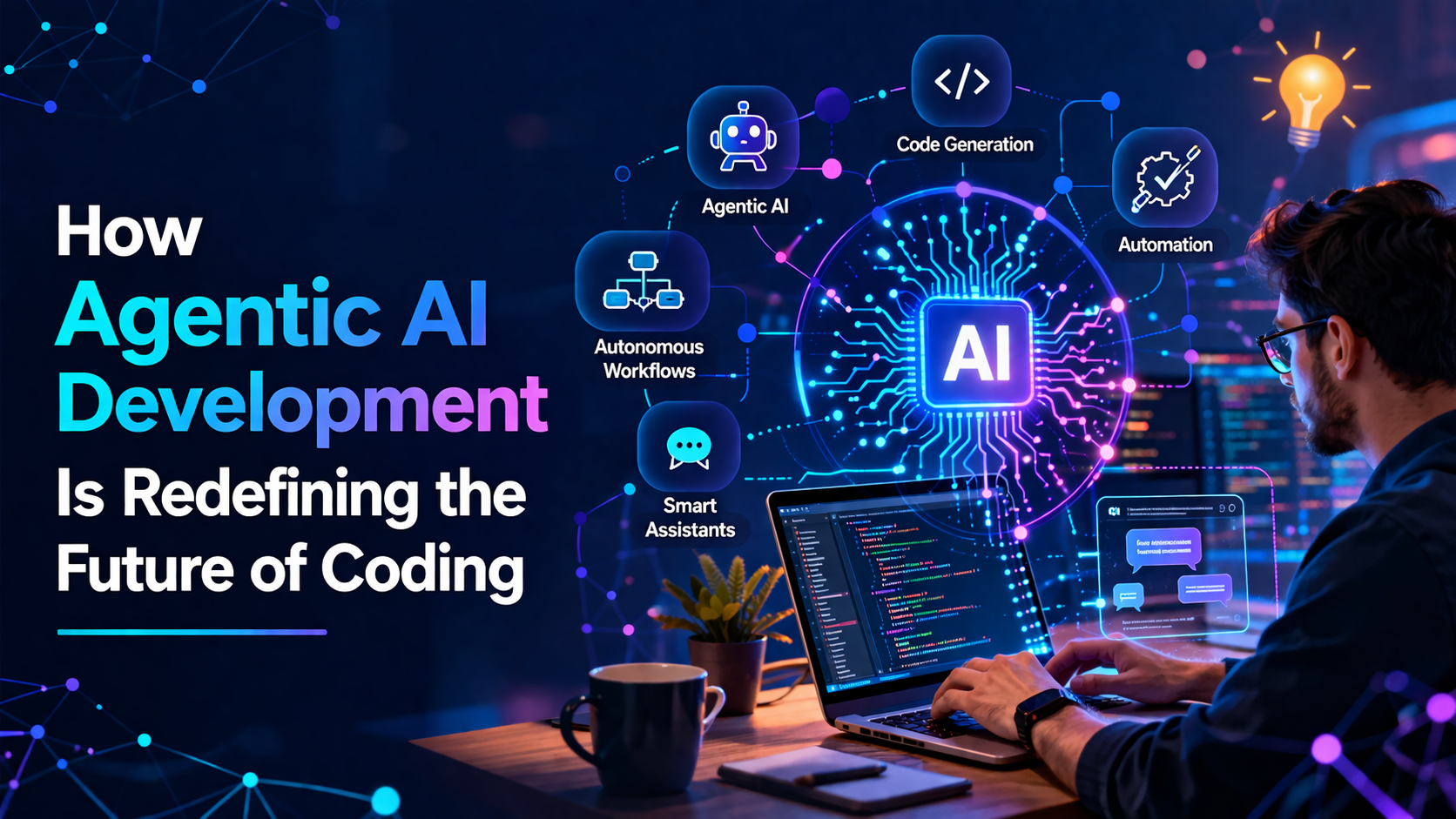
For years, writing software has meant one thing — people sitting at their desks, typing lines of code, fixing bugs, and pushing updates. That model hasn’t changed much in decades. But the ground beneath it is shifting fast. There’s a quiet but powerful revolution happening in the way software gets built, and it’s called agentic AI development.
It’s not just about speeding things up. It’s about changing how work happens and who does it. This is where agentic AI developers enter the scene, taking coding beyond human limits while keeping creativity and problem-solving in human hands.
Let’s explore how this shift is reshaping the software world and what it means for developers, teams, and the future of tech.
The Old Way: Manual Coding and Mental Overload
Ask any developer, and they’ll tell you—coding is a mix of thrill and exhaustion. You build something from scratch, watch it come alive, but also spend hours hunting for tiny mistakes that crash the whole system.
Software teams juggle a lot: logic, architecture, testing, deployment, user feedback. The constant back-and-forth between writing and fixing code burns time and energy. Every update or feature feels like a small mountain climb.
Even with advanced tools, humans still do most of the thinking and execution. AI, until recently, was more like an assistant—helpful, but still waiting for orders. That’s changing now.
What Makes Agentic AI Development Different

Agentic AI development flips the script. Instead of waiting for commands, AI systems start taking initiative. They don’t just generate snippets of code; they plan, reason, and complete tasks with minimal supervision.
These systems are built to act independently. They can design components, detect inefficiencies, fix bugs, and even suggest architecture improvements. You give them a goal, and they figure out the steps to reach it.
That’s a huge difference from traditional AI tools. It’s not “AI helps you code.” It’s “AI helps build the product with you.”
The result? Developers spend less time stuck in repetitive work and more time focusing on the big picture — user needs, scalability, and experience.
Developers Are Becoming More Like Architects
Agentic AI development doesn’t replace developers — it upgrades them. It shifts their role from task execution to creative direction.
Think of it this way: instead of manually writing hundreds of lines of boilerplate code, a developer now guides the AI, reviewing logic, adjusting workflows, and refining the output. The human becomes the strategist — the one deciding what to build and why — while the AI handles the “how.”
This new partnership creates balance. AI takes on the heavy, logical lifting; humans bring empathy, intuition, and understanding of real-world context. That blend leads to better products and faster results.
Speed Meets Quality
Speed has always been a double-edged sword in software development. Move fast, and you risk bugs. Slow down, and you fall behind competitors. Agentic AI development aims to fix that tension.
AI systems can work nonstop. They can run continuous tests, review performance, and adapt code in real time. That means teams get cleaner, more reliable builds — faster than before.
Imagine having an AI developer who never gets tired, who keeps improving your system even while you’re asleep. That’s the advantage businesses are beginning to notice.
But the best part? Quality doesn’t suffer. Because AI learns from every correction and review, it improves its own logic over time. The more it’s used, the better it gets.
Breaking the Repetition Loop
Let’s be honest: coding isn’t always glamorous. Much of it is maintenance — updating old functions, cleaning up legacy systems, running the same checks again and again.
That’s where agentic AI developers shine. They handle the repetitive, procedural tasks most programmers dislike. They write, refactor, and test without losing focus.
When you take those loops out of a developer’s day, creativity shoots up. The human brain is free to solve problems, design features, and think about innovation instead of routine. That’s where real progress happens.
So, instead of burning out on endless tickets, teams can focus on building something that actually moves the needle.
Team Collaboration Just Got Easier
Software development isn’t just about code; it’s about teamwork. And teams often struggle with coordination — missed updates, version conflicts, unclear responsibilities.
AI can now act as a digital team member that tracks everything. It can manage documentation, highlight overlaps, and flag inconsistencies between front-end and back-end work. It keeps everyone in sync without the constant back-and-forth.
Picture a scenario where your AI assistant updates all dependencies, documents the changes, and alerts the right people. That’s not a futuristic dream — it’s happening now in companies experimenting with agentic AI development systems.
When communication becomes smoother, the whole workflow benefits.
Smaller Teams, Bigger Output
In the past, scaling meant hiring more people. More features? More developers. But that’s changing.
With AI taking over repetitive work, small teams can now handle massive workloads. Startups with just a handful of engineers can deliver projects that used to require entire departments.
This levels the playing field. You don’t need deep pockets to compete anymore. You just need smart direction and the right AI partners.
It’s a shift that could redefine how companies grow and how projects get delivered across industries.
Still, There Are Questions
No major shift comes without questions. Can teams fully trust AI decisions? What happens when AI writes something wrong — who’s accountable?
Security also becomes crucial. Granting AI systems access to sensitive codebases means you need strong oversight and permissions.
There’s also the learning curve. Not every developer feels comfortable working alongside AI that acts on its own. Some worry about losing control or visibility into how the AI decides things.
These are valid concerns, but they’re not deal-breakers. The same conversations happened when automation tools first entered factories or when DevOps changed deployment pipelines. Over time, teams adapt, and best practices form.
Agentic AI development will follow that same path — growing more transparent, safer, and easier to manage as adoption rises.
Where Creativity Meets Automation
At its core, agentic AI development is about partnership. It’s not about replacing humans — it’s about amplifying them.
Humans bring creativity, judgment, and emotion. AI brings speed, memory, and precision. When you combine those strengths, you get results that neither could achieve alone.
It’s not just faster coding; it’s smarter building. It’s projects that adapt in real time, software that improves itself, and teams that stay focused on what matters most.
And the coolest part? We’re only at the beginning.
Looking Ahead
The software industry has always evolved — from punch cards to cloud computing to continuous delivery. But agentic AI development feels different. It’s not just a new toolset; it’s a new mindset.
Developers are no longer chained to their IDEs fixing small syntax errors. They’re working alongside intelligent systems that can think, learn, and act.
In the next few years, we’ll likely see hybrid teams where human and AI developers collaborate seamlessly. The best results will come from those who learn how to balance trust and control — letting AI handle the grind while keeping humans in charge of vision and direction.
This partnership is what will redefine coding as we know it. It’s not about giving up control; it’s about sharing it with something that can make the process smoother and smarter.
Agentic AI developers aren’t a replacement. They’re an upgrade to how we think, build, and innovate.
Final Thoughts: The New Era of Building
Coding has always been about problem-solving. Agentic AI just gives us better tools for it.
With this new development approach, we’re entering an era where software creation feels more natural, more efficient, and maybe even more fun. Developers get to do what they love — create — while AI handles what they don’t — repeat.
That’s not science fiction. That’s the next phase of software evolution, already unfolding.